



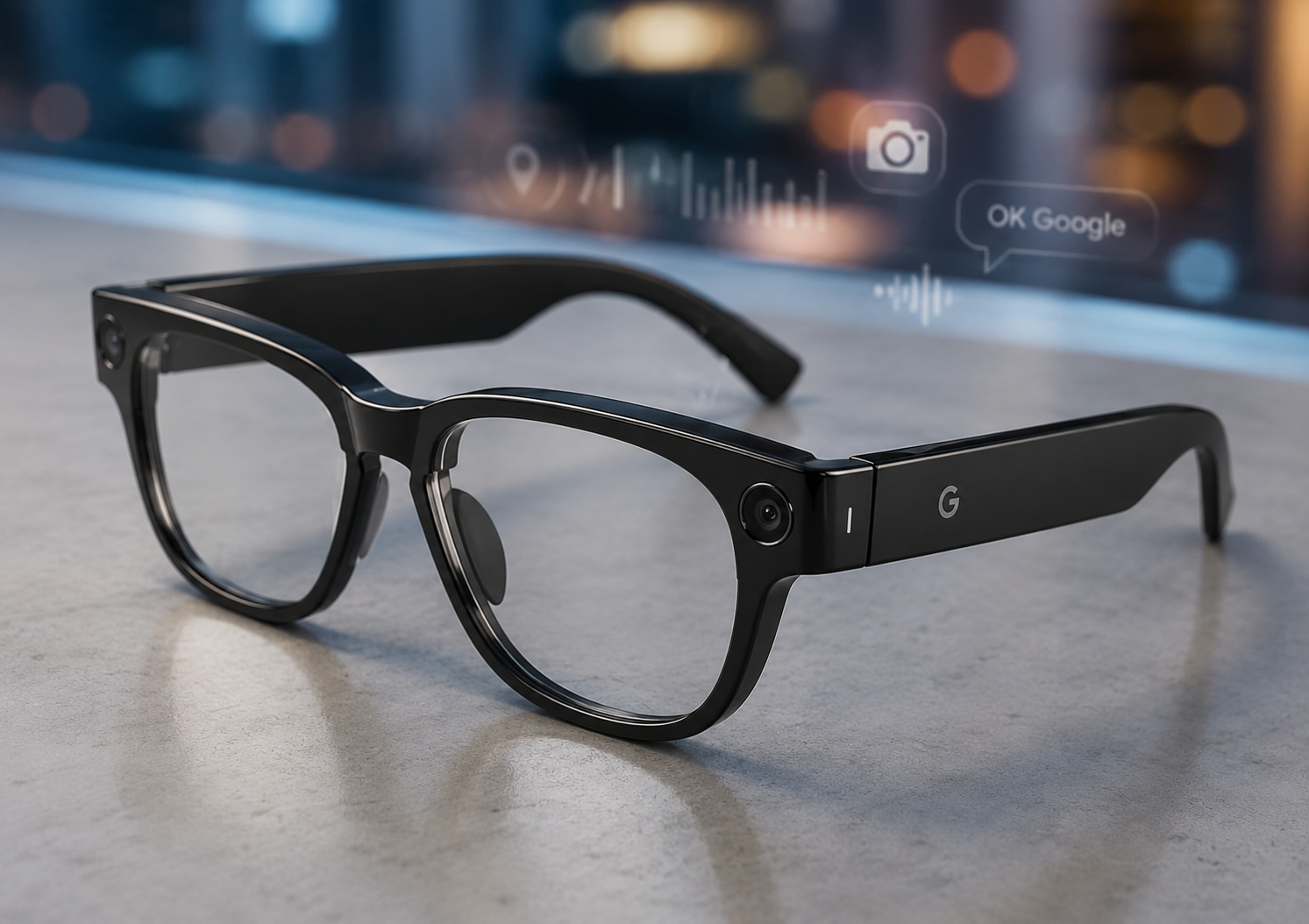
The artificial intelligence wearables market is entering a new phase. Google is preparing to launch its Gemini-powered smart glasses later this year. Backed by strategic partnerships and advanced AI capabilities, the company is expanding its presence in wearable technology. Deep integration with the Android ecosystem could give the glasses a competitive advantage. Through this launch, Google aims to challenge Meta, which has already gained significant traction in the smart eyewear market.
AI is expanding beyond smartphones and computers into everyday accessories. As a result, smart glasses are gaining momentum in the wearable technology market. Google’s upcoming launch highlights its vision of a hands-free and voice-driven future. The company aims to make technology more naturally integrated into daily life.
Google’s Entry into the Smart Glasses Market
Google’s new smart glasses will be introduced through collaborations with two well-known eyewear brands: Monster. While Google’s Gemini AI platform will power both products, they are expected to cater to different audiences through distinct design approaches.
Warby Parker is known for combining modern design with everyday practicality. Its approach may appeal to consumers looking for wearable technology that fits naturally into daily life. Gentle Monster takes a different approach with bold, fashion-forward designs. The brand has gained popularity among younger audiences, influencers, and celebrities.
By partnering with established eyewear brands rather than creating standalone hardware, Google aims to combine advanced technology with stylish designs that users will genuinely want to wear.
A Different Approach to Smart Eyewear
One of the most notable aspects of Google’s first-generation smart glasses is what they will not include. Unlike many experimental smart glasses showcased over the years, the initial commercial versions are expected to launch without an in-lens display.
This decision may surprise some technology enthusiasts, especially considering Google’s previous demonstrations of display-equipped prototypes. However, the company appears to be focusing on practical everyday functionality rather than pushing visual interfaces too aggressively in the first release.
Instead of displaying information directly in front of the user’s eyes, the glasses will rely heavily on audio interactions, voice commands, cameras, microphones, and speakers. This approach could make the devices more lightweight, comfortable, and affordable while still delivering meaningful AI-powered experiences.
Gemini AI Takes Center Stage
The true differentiator of Google’s smart glasses lies in Gemini, the company’s advanced artificial intelligence platform.
Users will be able to interact with Gemini using natural voice commands, enabling a more conversational and intuitive experience. Rather than tapping screens or navigating menus, users can simply speak to the AI assistant to perform various tasks.
Gemini is designed to understand context, process complex requests, and interact with multiple Google services. This allows the smart glasses to become more than just a wearable camera or audio device. Instead, they act as an intelligent digital companion capable of assisting users throughout the day.
Whether it’s finding directions, answering questions, capturing photos, or accessing information on the go, Gemini aims to make interactions faster and more seamless.
Deep Android Integration
Google’s biggest advantage may come from its extensive Android ecosystem.
The upcoming smart glasses are expected to work closely with Android smartphones, leveraging their computing power and connectivity. Many functions will rely on a connected smartphone, enabling users to access apps, services, and AI-powered features without constantly handling their devices.
This integration extends beyond simple notifications. Google has demonstrated scenarios where Gemini can launch applications, complete tasks, and coordinate actions across devices.
For example, users may be able to request a routine task using voice commands, and Gemini can automatically open the relevant app and perform the action on their behalf. This represents a shift toward more proactive and autonomous AI experiences.
As artificial intelligence evolves, such capabilities could become one of the strongest selling points for wearable technology.
Enhanced Navigation and Everyday Assistance
Navigation is expected to be one of the most practical use cases for Google’s smart glasses.
Instead of repeatedly checking a smartphone screen while walking or driving, users can receive turn-by-turn audio guidance directly through the glasses. This hands-free experience has the potential to improve convenience and safety.
Google is also exploring ways to use Gemini for real-world assistance, helping users complete everyday activities through voice interactions. From setting reminders and checking schedules to retrieving information and managing tasks, the glasses aim to serve as a constantly available digital assistant.
These capabilities align with Google’s broader vision of integrating AI into everyday moments rather than limiting it to traditional devices.
AI-Powered Photography Features
The smart glasses will include cameras that enable users to capture photos and potentially videos from a first-person perspective.
What makes the experience unique is Gemini’s ability to enhance captured content through AI-powered editing features. Rather than requiring users to manually edit images later, AI can help improve photographs quickly and efficiently.
Wearable cameras and AI editing tools work together to simplify content creation. The feature could attract travelers, content creators, and everyday users who want an easier way to document experiences.
Wearable Ecosystem Expansion
Although the glasses themselves may not feature displays, Google is leveraging other wearable devices to fill that gap.
The company has demonstrated how connected Wear OS devices, such as smartwatches, can work alongside the glasses. For instance, photos captured through the glasses can be previewed on a smartwatch screen, creating a connected ecosystem experience.
This strategy allows Google to distribute functionality across multiple devices rather than attempting to fit every feature into a single product.
By connecting smartphones, smartwatches, and smart glasses through Gemini AI, Google is building a broader ecosystem designed around convenience and intelligent assistance.
Taking on Meta’s Growing Dominance
Google’s arrival comes at a time when Meta has already gained significant momentum in the smart eyewear market. Meta’s partnership with Ray-Ban has helped introduce millions of consumers to AI-powered glasses and established smart eyewear as a legitimate product category.
As a result, Google faces the challenge of convincing users to switch or adopt a competing platform.
However, Google’s strengths are difficult to ignore. Its expertise in artificial intelligence, access to billions of Android users, and integration with popular services such as Maps, Search, and other Google products provide a powerful foundation for growth.
If Gemini delivers a noticeably smarter and more capable experience than competing solutions, Google could quickly become a major player in the wearable technology space.
The Future of AI Wearables
The launch of Google’s Gemini-powered smart glasses represents more than just a new hardware release. It highlights the growing importance of AI-driven wearables as technology companies search for the next major computing platform.
While smartphones remain central to digital life today, the future may involve devices that blend naturally into everyday routines while providing instant access to intelligent assistance.
As Google, Meta, and other technology companies continue to innovate, smart glasses could evolve from niche gadgets into mainstream consumer products. The upcoming Gemini-powered devices may be among the first significant steps toward that future.
With AI at the core of the experience and Android integration providing a competitive advantage, Google’s smart glasses could play a pivotal role in shaping the next generation of wearable technology.