




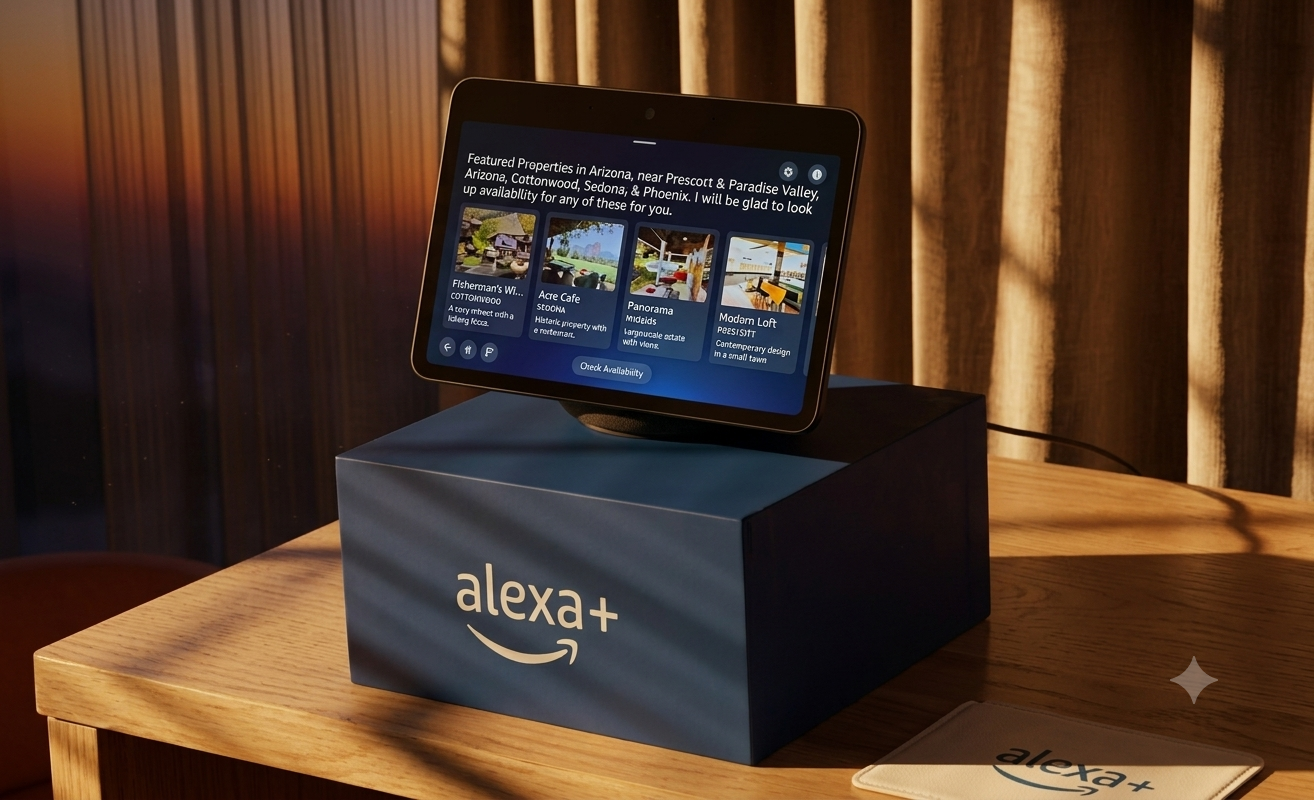
Amazon has officially brought its generative AI-powered voice assistant, Alexa+, to India. The launch marks a major upgrade to the platform since Alexa arrived in the country in 2017. It also signals Amazon’s push to compete more strongly in the growing AI assistant market. The launch follows months of closed beta testing with selected Indian users.
From Command-Based to Conversational
The original Alexa, for all its popularity, was built on a fairly rigid command-response model. Users had to phrase requests in specific ways, and the assistant often struggled with follow-up questions or nuanced conversation. Alexa+ changes that fundamentally. Amazon’s Alexa+ AI chatbot became available to everyone in the US in February, and it has since expanded to other markets with support for Hindi as it prepared for an India launch.
Alexa+ combines Amazon’s own Nova models with AI systems from its partners. It is designed to support natural, flowing conversations and remember context across interactions. The assistant can also complete multi-step tasks. These include booking a table, managing a shopping list, and controlling multiple smart home devices. Users can interact with Alexa+ without relying on precise or repetitive commands.
Why India, and Why Now
India is one of the largest and most linguistically complex markets for voice assistants. The country has around 600 million people in the voice space. Amazon recognizes that strong Hindi support is key to reaching this large user base.
Making a generative AI assistant work well across Hindi, Hinglish, and regional accents is technically demanding. Amazon appears to have taken a cautious approach to solving this challenge.
That caution showed up in how the rollout unfolded. Amazon first announced its generative AI-powered conversational assistant Alexa+ in 2025, but the rollout was slow, with the experience made available to all US users only in February 2026, before expanding its footprint to countries like the UK, Canada, Brazil, Mexico, Italy, and Germany with support for local context.
India followed a similarly staged approach. Amazon invited select users to participate in a beta programme, sending emails that asked them to complete a Hindi-language feedback form. The company warned that the beta software could contain bugs, produce occasional inaccuracies, or have difficulty handling local pronunciations. This controlled testing allowed Amazon to gather real-world data from Indian households before moving toward a broader release—a practical approach in a market known for its diversity of accents, dialects, and code-mixed speech.
What’s Different About Alexa+
For everyday users, the shift to Alexa+ should feel less like a system update and more like talking to a different assistant altogether. Key improvements include:
- Natural, context-aware conversations, Alexa+ can follow the thread of a discussion rather than treating every request as an isolated command.
- Personalization, the assistant learns preferences over time, tailoring recommendations for music, news, and shopping.
- Complex task handling, from grocery orders to restaurant reservations, Alexa+ can execute multi-step actions with minimal hand-holding.
- Curated, credible information, Amazon has said it collaborates with more than 200 global media outlets to help ensure accurate, timely information delivery and reduce the risk of misinformation.
Availability and Access
Alexa+ is being offered as part of Amazon Prime membership tiers, though the company has been measured about announcing a firm general-availability date. This mirrors Amazon’s global strategy, where Prime members typically get Alexa+ access included, while non-Prime users can opt in through a monthly subscription.
Given India’s scale, getting Alexa+ right is important for Amazon. Alexa launched in India in 2018 with around 10,000 skills. The platform later expanded its Hindi-language capabilities to handle hundreds of thousands of daily requests in Hindi and Hinglish.
A smooth and useful generative AI experience could strengthen Amazon’s position among Indian households. Many already use Echo devices and the Alexa app. A less reliable experience could lead users to explore Google and other AI-first assistants.
Conclusion
Alexa+’s India launch is part of a broader pattern: global tech companies are racing to localize generative AI, not just translate it. Language support, cultural context, and regional relevance are becoming as important as raw model capability. For Amazon, cracking India, a market defined by linguistic diversity and price sensitivity, could serve as a blueprint for expanding Alexa+ into other complex, multilingual markets across Asia.
Whether Alexa+ becomes the default way Indians interact with their smart devices will depend on how well it handles the messy, code-switching, accent-rich reality of everyday Indian speech, something Amazon has spent nearly a decade trying to perfect with the original Alexa. With generative AI now in the mix, the bar has been raised, and so have the expectations.