

Apple has spent years circling the smart home without ever planting a flag in it. This week, under its new chief executive, it finally did.
What Apple announced
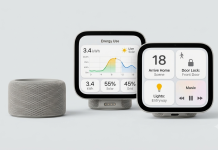
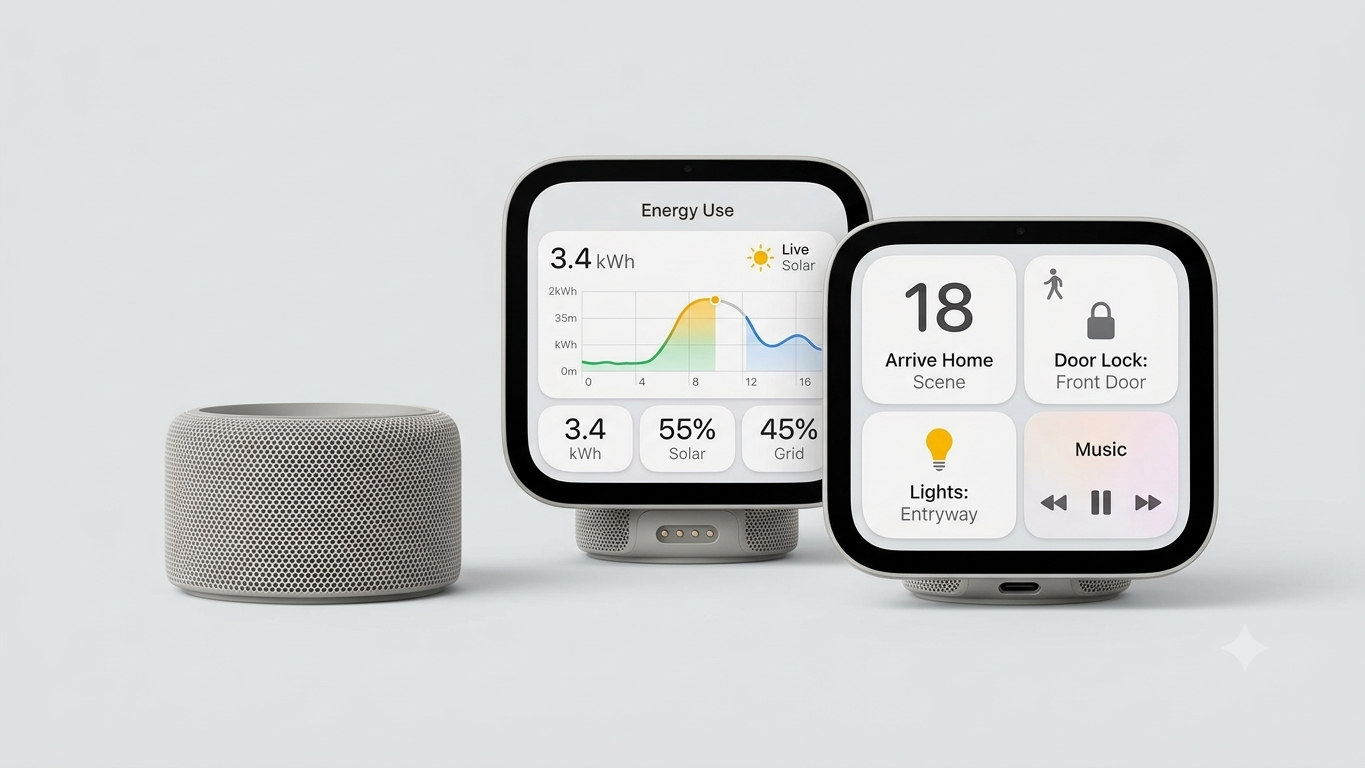
Apple unveiled HomeView on Tuesday, a voice-driven smart display built around its revamped Siri AI assistant, and it will sell for $299 in the US starting November 13. The device pairs a square 7-inch touchscreen with a speaker base and is meant to act as a family command center for lights, locks, thermostats and cameras. It also handles FaceTime calls, plays music and video, and works as a digital picture frame when idle.
It can sit on a counter in its speaker mount or go on a wall. The launch was bigger than one gadget. Apple also announced a new Apple TV 4K with Siri AI, an upgraded HomePod mini, and smart home accessories developed with LG Electronics and Schneider Electric. The accessories include a smart door lock, video doorbell, thermostat and security camera.
A shared screen that knows who’s looking
The most interesting feature is personalization. HomeView can recognize up to six members of a household and change its content based on who is using it. Apple’s marketing chief put the goal this way: a device shared by everyone in the home that still feels personal to each user.
This addresses the oldest complaint about shared screens. A kitchen display is useful because everyone can reach it, but nobody wants their messages or calendar visible to the whole household. Face recognition that adapts what appears on screen could resolve that tension.
Why this is a Ternus moment
HomeView arrives early in a new era. It is one of the first launches under John Ternus, the former hardware engineering chief who took over from Tim Cook on September 1. A month earlier, Apple had shown the iPhone Duo, a foldable phone that opens and closes like a book. Together, the two launches read as an attempt to show that Apple can still be bold.
The pressure is real. Ternus inherited a company that has faced years of criticism for making incremental improvements to the iPhone and for missing the mark on new bets like the Vision Pro. A hardware engineer by background, he now has to show that his product instincts can carry the whole company. Analysts describe HomeView as a major test of that.
The competition got there first
Apple is not entering an empty field. HomeView will compete directly with Google Nest and Amazon’s Echo Show. Apple’s HomePod speakers have long trailed Amazon’s Alexa and Google’s devices in the smart home. Those rivals launched their displays years ago and have a large installed base.
Apple’s counterargument is the ecosystem. Analysts see the new hardware as a way to deepen customers’ ties to Apple’s ecosystem while AI rivals such as OpenAI eye devices of their own. If your phone, watch, TV and speakers already run on Apple software, a hub that ties them together is an easy sell. The hard part is getting people who already own a cheaper Echo or Nest to switch.
Siri’s second chance
The device lives or dies on the assistant. Apple is pitching the overhauled Siri AI as a more conversational helper than the original. Early demonstrations include asking Siri to find your keys via AirTags and checking your calendar.
Siri has a long record of promising more than it delivered, so this matters. A smart display that fumbles basic requests becomes an expensive picture frame. If the new Siri works as pitched, HomeView becomes the product that rehabilitates the assistant for the home.
The privacy question
Putting a camera and microphone-equipped screen in every kitchen invites skepticism. Apple shareholder and wealth manager Ross Gerber said he doesn’t trust technology companies and doesn’t want devices recording what he says and does at home. Apple’s response is that it cannot access the data HomeView processes.
Privacy is Apple’s traditional selling point, and it is marketing the Home Collection to people who want easy integration with its ecosystem plus robust privacy protections. Expect that claim to be tested hard once reviewers and security researchers get units in hand.
Conclusion
Three things will decide whether HomeView is a hit. First, how well Siri AI handles everyday requests. Second, whether the $299 price and ecosystem pull are enough to win over Echo and Nest owners. Third, whether Apple’s partner accessories make setup simple, since a smart home that takes a weekend to configure rarely survives.
HomeView ships November 13, so the verdict will arrive in time for the holiday shopping season. For Ternus, it is a first real chance to show what an engineer-led Apple looks like.